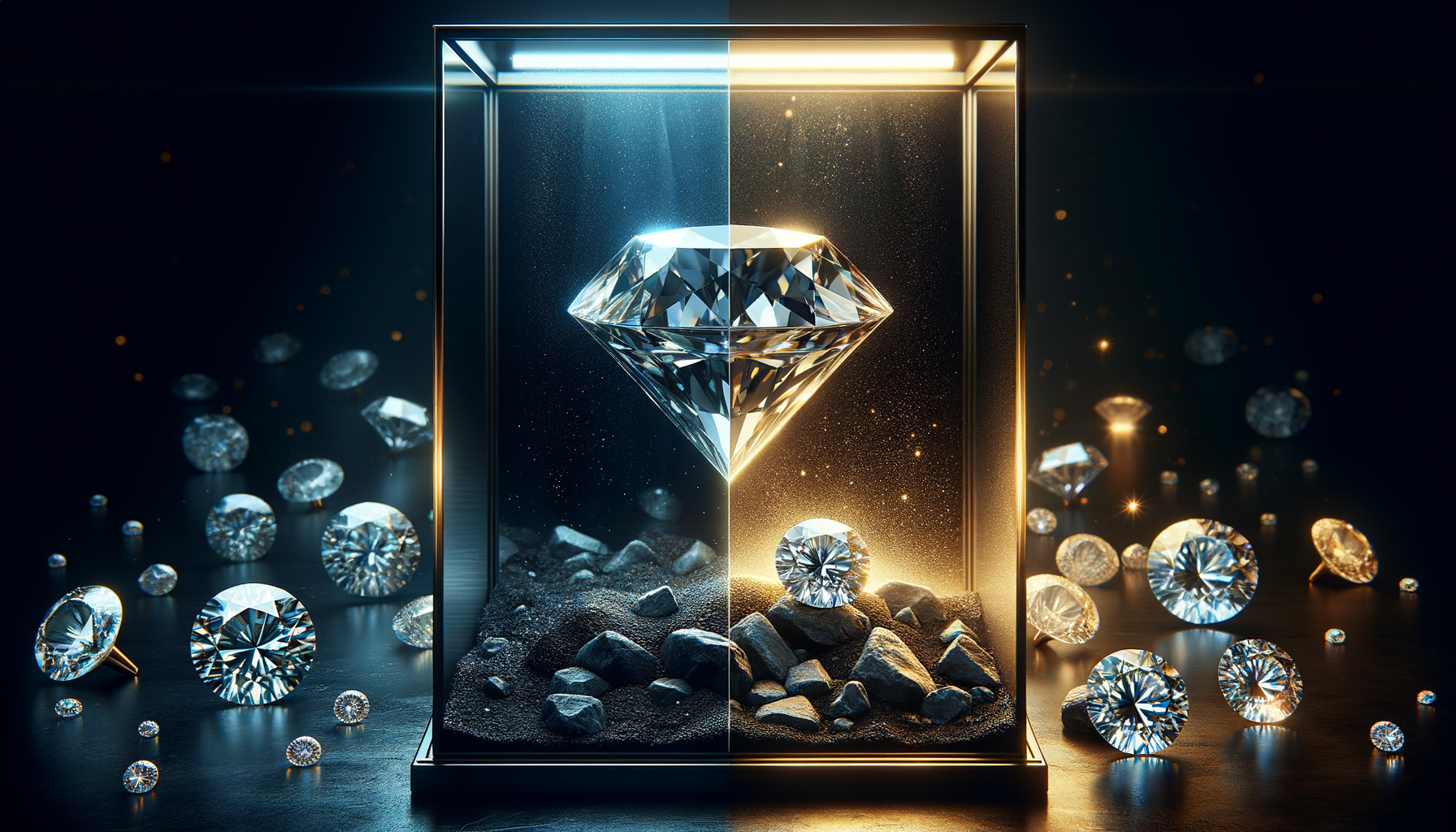
The Diamond Revolution Is Now the Diamond Reality
Not long ago, choosing a diamond meant accepting a single narrative: mined from the earth, priced at a premium, and marketed as irreplaceable. That narrative has collapsed.
lab-grown diamonds - also called lab-created or cultured diamonds - are genuine diamonds grown in advanced laboratory environments that replicate the conditions found deep within the Earth's mantle. They share the exact same physical, chemical, and optical properties as mined diamonds. No exceptions.
By 2026, lab-grown diamonds account for more than 20% of the global diamond market, with adoption accelerating fastest among millennials and Gen Z consumers. These buyers aren't settling - they're making a smarter, more informed choice. And Toronto's discerning jewelry shoppers are leading that shift in Canada.
What Is a Lab-Grown Diamond, Really?
Let's be precise: a lab-grown diamond is not a simulant. It is not cubic zirconia. It is not moissanite. It is a genuine diamond - pure crystallized carbon arranged in the iconic diamond crystal lattice - with one distinction from its mined counterpart: where it was created.
Two proven methods produce lab-grown diamonds at scale:
HPHT (High Pressure, High Temperature)
This process mirrors the geological conditions that produce natural diamonds. A diamond seed is placed within carbon material and subjected to temperatures above 1,500°C and pressures exceeding 1.5 million pounds per square inch. Over days to weeks, carbon atoms crystallize around the seed, forming a rough diamond crystal ready for cutting and polishing.
CVD (Chemical Vapor Deposition)
A diamond seed is placed inside a sealed chamber filled with carbon-rich gas - typically methane. Heated to roughly 800°C, the gas is ionized into plasma, freeing carbon atoms that deposit onto the seed layer by layer. Think of it as diamond growth from the atom up, with extraordinary precision.
Both methods produce diamonds that are chemically, physically, and optically identical to mined stones. Even experienced gemologists cannot distinguish them without advanced spectroscopic equipment designed specifically to analyze crystal growth patterns.
The Differences That Actually Matter to You
Price: The Most Compelling Conversation
Lab-grown diamonds consistently cost 60-80% less than comparable mined diamonds. A 1-carat lab-grown diamond might retail between $1,500 and $2,800, while an equivalent mined stone of similar quality could reach $8,000 to $12,000 or beyond.
That gap isn't a gimmick - it reflects a fundamentally different supply chain. Mined diamonds travel through extraction operations, international logistics, and multiple intermediary markups before reaching a showcase. Lab-grown diamonds bypass most of that entirely, and the savings pass directly to you.
For Toronto couples budgeting for an engagement ring collection, that difference can mean choosing a larger stone, upgrading to a custom setting, or simply keeping more of your money.
Quality: Precision Over Chance
Here's what surprises most shoppers: lab-grown diamonds frequently achieve higher quality grades than mined stones. Because the growth environment is precisely controlled, structural imperfections and inclusions are far less common. VVS1 clarity and excellent cut grades are routine rather than exceptional in the lab-grown category.
All lab-grown diamonds are graded on the identical 4Cs framework - Cut, Color, Clarity, and Carat - using the same rigorous standards applied to mined diamonds.
Certification: Full Transparency, Same Standards
Every lab-grown diamond in our collection comes with certification from the IGI (International Gemological Institute) or GIA (Gemological Institute of America) - the same independent laboratories that certify mined diamonds worldwide. Your certificate documents the exact 4Cs grades, measurements, fluorescence characteristics, and clearly identifies the diamond's lab-grown origin.
At our Toronto visit our showroom, we provide complete certification documentation with every purchase. There are no surprises, no ambiguity, and no fine print.
Environmental Impact: Numbers That Matter
Diamond mining displaces an estimated 250 tonnes of earth per carat recovered. It consumes enormous quantities of fresh water, generates significant carbon emissions, and permanently disrupts ecosystems - with environmental scars visible from satellite imagery decades later.
Lab-grown diamond production requires approximately 85% less energy, uses minimal water, produces negligible waste, and carries a fraction of the carbon footprint. Studies estimate mined diamonds generate roughly 125 pounds of carbon per carat; lab-grown diamonds produce approximately 0.028 pounds.
For environmentally conscious GTA consumers, this isn't a minor footnote - it's a deciding factor.
Ethical Sourcing: Certainty Where It Counts
The mined diamond industry continues to face scrutiny over conflict diamonds, labour exploitation, and human rights concerns in certain mining regions. The Kimberley Process has improved monitoring, but acknowledged gaps in enforcement remain a legitimate concern for ethically minded buyers.
Lab-grown diamonds are produced in regulated, audited facilities with complete supply chain transparency. You know exactly where your diamond originated. No community displacement. No ambiguity about who was harmed - because no one was.
What's New in Lab-Grown Diamond Technology for 2026
The industry hasn't stood still. Significant advances have raised the bar further:
Faster, More Consistent Production - Next-generation CVD and HPHT reactors now produce gem-quality diamonds up to 40% faster than previous equipment, with measurably greater consistency across color and clarity grades.
Fancy Colored Diamonds at Accessible Prices - Controlled introduction of trace elements during the growth process now yields stunning vivid yellows, blues, and pinks - fancy colored diamonds that once required extraordinary budgets are now genuinely accessible.
Larger Stones, Reliably - Technological refinements now enable routine production of high-quality lab-grown diamonds exceeding 5 carats, a threshold that was technically challenging to achieve consistently just a few years ago.
Common Misconceptions, Addressed Directly
"Lab-grown diamonds aren't real diamonds." False. Lab-grown diamonds are real diamonds by every scientific, gemological, and legal standard. They share identical hardness (10 on the Mohs scale), refractive index, thermal conductivity, and chemical composition as mined diamonds. The Federal Trade Commission has formally recognized them as diamonds since 2018, a position that has only been reinforced in subsequent years.
"You can tell the difference just by looking." Scientifically impossible. No visual inspection - regardless of the examiner's experience - can distinguish a lab-grown diamond from a mined one. Advanced spectroscopic analysis of crystal growth patterns is the only method of identification.
"Lab-grown diamonds lose their brilliance over time." Also impossible. Diamonds are the hardest material on Earth, and lab-grown diamonds share this identical crystal structure. They will not fade, cloud, or degrade - ever.
"Lab-grown diamonds have no resale value." A misleading comparison. Mined diamonds also lose 40-60% of retail value immediately after purchase. Diamonds of any origin are not investment vehicles - they are objects of beauty meant to be worn and treasured. The 60-80% savings on the initial purchase makes lab-grown diamonds the considerably stronger financial decision.
Who Is the Ideal Lab-Grown Diamond Buyer?
Lab-grown diamonds are an exceptional choice for:
- Value-focused buyers who want maximum carat weight and quality within their budget
- Environmentally conscious consumers who factor sustainability into purchasing decisions
- Ethically minded shoppers who require complete supply chain transparency
- Design-forward clients who want to allocate more of their budget toward custom settings and master craftsmanship
- Toronto couples who want their engagement ring to reflect both their love and their values
Every piece in our curated collection features IGI or GIA-certified lab-grown diamonds set in premium 14K or 18K gold. Luxury and ethics are not in conflict here - they're the same thing.
The Toronto Market in 2026
Toronto and Vancouver continue to lead Canadian adoption of lab-grown diamonds, with the GTA market posting strong year-over-year growth as awareness increases. Major luxury retailers now feature lab-grown diamonds prominently alongside mined stones, and industry data shows that 73% of millennial and Gen Z consumers prefer lab-grown diamonds when presented with accurate information about both options.
This isn't a fringe movement. It's where the market is going - and Toronto's jewelry shoppers are ahead of the curve.
Experience the Difference at Our Toronto Showroom
Our showroom offers something you cannot replicate online: a side-by-side comparison of lab-grown and mined diamonds, in person, under professional lighting, with a certified expert beside you.
We offer:
- Hands-on diamond comparisons with full transparency
- Expert guidance on the 4Cs and certification interpretation
- Custom design consultations with master jewelers
- Comprehensive warranties and lifetime service commitments
The Bottom Line
Lab-grown diamonds deliver everything a mined diamond offers - the brilliance, the hardness, the certified quality - at 60-80% less cost, with a dramatically lower environmental footprint and complete ethical transparency.
The science is settled. The certifications are identical. The savings are real. The ethics are unimpeachable.
For Toronto's informed jewelry buyers, the question is no longer whether lab-grown diamonds are legitimate. The question is why you would choose to pay significantly more for something indistinguishable - when the difference in price could be the difference in the ring of a lifetime.
Ready to see the difference for yourself? Visit our Toronto showroom or book a private consultation with our diamond experts to explore our certified lab-grown diamond collection.